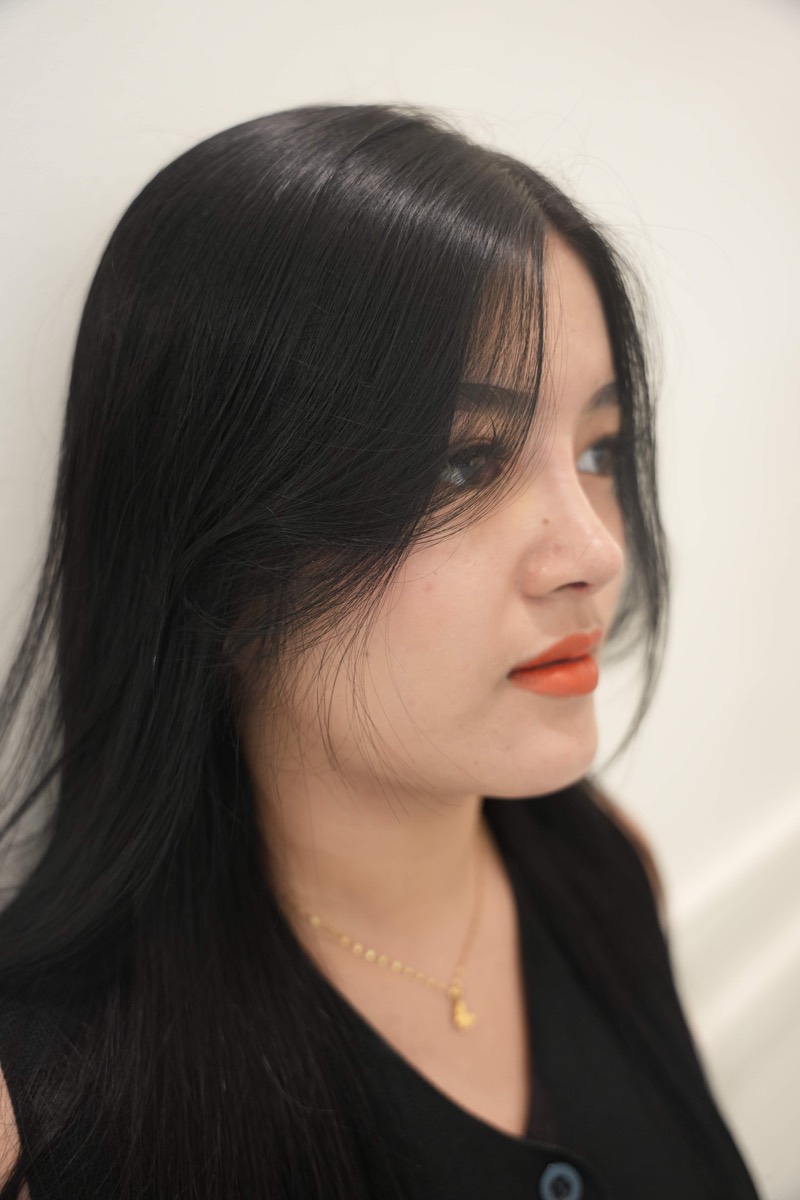

Medically reviewed by Dr. Jule Yasser Kong, R.N., M.D. · PRC Licence No. 0133571 · 28 October 2026
"Puyat ka?" If people ask you that even after a full night's sleep, this one's for you.
The 30-second version
You slept a full eight hours, and someone still asks, "Puyat ka?" Or maybe your upper lids feel heavy by mid-afternoon, and your eyeliner keeps disappearing into a fold.
If that sounds familiar, your eyelids may be part of the story. Here's how to check.
The 60-second mirror test
Stand in daylight. Look straight ahead. Relax your forehead.
The mirror only gets you so far, though. A bag isn't always fat, and the crease and skin of the upper lid need a trained eye.
"Because every patient's anatomy is different, we need to assess your eyes and facial structure in person before recommending the procedure."
Dr. Jule Yasser KongBlepharoplasty is really two operations with one name.
Upper lid
Extra skin folding down, like a curtain over a window. Surgery takes care of the extra skin.
Lower lid
Little cushions of fat pushing forward under the eye. Surgery takes care of the bags.
At your assessment, the doctor checks five things:
Need both? Upper and lower can be done in one operation, under the same sedation, for a more balanced look across the whole eye area. Some people only need one. Finding out which group you're in is the whole point of the visit.
At One Nadela, blepharoplasty starts at ₱75,000, at our Cebu and Makati clinics. Your exact price comes after the doctor sees you, because one lid and two lids are different amounts of work.
Budget time as well as money. Most people go back to work in about one to two weeks. If you're self-employed or paid per shift, count those days.
Getting quotes? Ask every clinic
A cheap quote and an expensive one may simply be for different work.
Each stage is usually a little easier than the last, though everyone heals at their own pace.
Planning around a big day?
Wedding, graduation, a trip full of photos? Leave well over two weeks before it, and longer if you can. And don't judge your eyes in the first few days.
"Patience is an important part of blepharoplasty recovery."
Dr. Jule Yasser KongOn the upper lid, the incision usually sits along your natural crease. On the lower lid, it's placed just under the lashes or, for some patients, on the inside of the lid. Which one you get depends on your anatomy, and the doctor explains it before anything is booked.
Like any operation, eyelid surgery has some. It helps to sort them into three groups.
| Group | What |
|---|---|
| Normal while healing | Swelling, bruising, tight lids, dry or gritty eyes, watery eyes, light sensitivity, and short-lived blurry vision from ointment or swelling. These usually settle as you heal. |
| Less common | Uneven results, a scar that stays visible, too much or too little tissue removed, trouble fully closing your eyes for a while, numbness, infection, or a lower lid that pulls down or turns out (ectropion). Some patients need a touch-up surgery. |
| Rare but serious | Bleeding that collects behind the eye and presses on the nerve that carries sight. Without urgent treatment, it can cause permanent vision loss. It's rare, and it's the most serious risk of eyelid surgery. |
Know the warning signs
Sudden, severe pain around the eye, swelling that gets worse quickly, or any change in your vision. If you notice any of these after surgery, call the clinic right away or go to the nearest emergency room.
Ask your doctor to walk you through each group for your own eyes. A clear, honest answer is a good sign about any clinic.
They can. When upper lid skin hangs over your lashes, it can block part of what you see, usually at the top and sides. For the right patient, removing that skin can make the eyes easier to open and clear the view. So the surgery can help your sight as well as your looks. The doctor checks whether this applies to you.
Surgery fixes the lids you have now, but it doesn't stop the clock. The skin around your eyes keeps ageing, and the upper lid tends to show it more. It differs from person to person, but for most, results usually last five to ten years, often longer.
What's next?
If the mirror test raised a real question, book an assessment at our Cebu or Makati clinic. The doctor looks at your eyes, tells you honestly whether surgery makes sense, and gives you a price before anything is decided.
If it turns out to be the skin under your eyes rather than a bag, our under-eye treatments page lists the non-surgical options.
One Nadela is doctor-led, with 900+ Google reviews across our three clinics, rated 4.9 to 5.0 stars.
Upper surgery treats extra, hooding skin on the top lid. Lower surgery treats bags under the eye. Many people have a bit of both, so the doctor checks in person.
It's done under IV sedation, for both upper and lower lids. You're deeply relaxed the whole time.
Most people go back in about one to two weeks. Public-facing or physical work may need a few more days.
You'll usually see an improvement early, but light swelling and scar healing can continue for several months.
It starts at ₱75,000 at our Cebu and Makati clinics. Your exact price comes after the doctor checks your eyes.